
Crypto Options Trading Platforms have become an essential part of the digital asset market, which has grown into a trillion-dollar industry. Millions of investors now seek reliable exchanges to trade derivatives and manage their portfolios effectively, with global crypto ownership estimated at over 560 million users worldwide (TripleA Research, 2026)
You need the right platform to succeed in today’s competitive landscape. Leading exchanges like Coinfutures.io, Binance, Bybit, OKX, Deribit, Delta Exchange, and KuCoin offer sophisticated tools for both beginners and experienced traders.
Crypto contract trading has become essential for portfolio management and risk control. These derivatives allow you to hedge positions, speculate on price movements, and generate income through premium collection.
Choosing the right exchange matters more than ever. When evaluating the best options, it’s helpful to review a comprehensive crypto options trading platforms list and consider factors like security measures, market liquidity, fee structures, and available instruments. This guide will help you understand how digital asset derivatives differ from traditional markets and why platform selection impacts your success.
Top 7 Crypto Options Trading Platforms for 2026
- CoinFutures – High-leverage options trading with flexible margins and alerts.
- Binance – Largest exchange offering deep liquidity and ultra-low commissions.
- Bybit – Integrated spot, futures and options with 0% maker fees.
- OKX – BTC & ETH options with advanced tools and Web3 features.
- Deribit – Professional-grade platform specializing in high-liquidity crypto derivatives.
- Delta Exchange – User-friendly dashboard with portfolio margin and advanced charts.
- KuCoin – Beginner-friendly options trading with automated tools and simple interface.
Crypto Options Trading Platforms in Comparision
| Platform | Supported Assets | Options Types | Liquidity Level | Fees & Spreads | Advanced Tools | KYC Requirements | Best For |
|---|---|---|---|---|---|---|---|
| CoinFutures | BTC, ETH, XRP, DOGE | Simulated Options (Futures-like) | High on majors | 0% maker, variable taker | Custom alerts, 1000x leverage, risk-capped trading | No KYC | KYC-free high leverage trading |
| Binance | BTC, ETH, BNB + 150+ | European & American | Very High | From 0% maker, tight spreads | Greeks, options calculator, cross-product margin | Full KYC | Low-fee options + pro tools |
| Bybit | BTC, ETH | European Options | High | 0% maker, low taker | Portfolio margin, unified account, backtesting | KYC partial | Multi-derivative traders |
| OKX | BTC, ETH | European Options | High | Competitive fees | AI signals, Web3 wallet, strategy tools | KYC required | CEX + Web3 traders |
| Deribit | BTC, ETH | European Options | Very High | Low maker, tight spreads | Full Greeks, vol surfaces, pro tools | KYC required | Professional options traders |
| Delta Exchange | BTC, ETH, selected altcoins | European Options | Medium | Low fees + rebates | Portfolio margin, custom indicators | KYC required | Advanced technical traders |
| KuCoin | BTC, ETH | Simplified Options | Medium | Low fees (slightly wider spreads) | Auto-strategies, risk calculators | Optional KYC | Complete beginners |
Detailed Reviews of the Standout Crypto Options Trading Platforms
The top crypto options trading platforms US are known for their unique features, competitive prices, and wide range of assets. Each platform meets different trader needs, from high-leverage options to a vast selection of cryptocurrencies. Knowing these differences helps you pick the best exchange for your trading style.
Four leading platforms stand out for their unique approaches to crypto options trading. They offer different fee structures, leverage options, and specialized tools for both new and experienced traders.
1. CoinFutures – Trade Long & Short Positions With Minimal Margin Requirements
CoinFutures.io is known for its derivatives-first approach, offering extremely high leverage of up to 1,000x, which traders can explore safely with its demo and educational resources. This makes it attractive for traders looking to maximize capital efficiency. The platform’s margin requirements adjust dynamically to market conditions, providing flexibility and positioning it as a strong alternative to other crypto derivatives platforms.
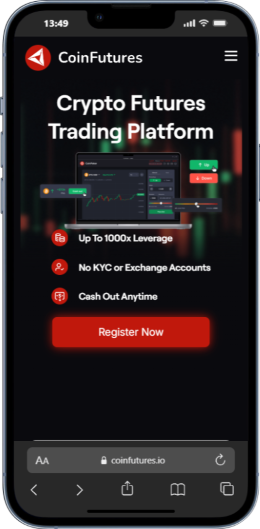
To help manage risk, CoinFutures provides customizable liquidation alerts, which notify traders before positions reach critical margin levels—a crucial feature when using high leverage.
The best crypto options trading platform US primarily focuses on futures trading rather than spot markets, allowing it to offer advanced derivatives tools that many general exchanges lack. Its interface is tailored for experienced traders familiar with complex derivatives strategies.
Pros:
- Extremely high leverage (up to 1,000x) for advanced strategies
- Flexible margin requirements that adapt to market conditions
- Customizable liquidation alerts for proactive risk management
- Specialized in derivatives with advanced tools
Cons:
- Not suitable for beginners due to complexity
- No spot trading for basic crypto purchases
- Regulatory uncertainty in some regions
2. Binance – Access Diverse Options Markets at Industry-Low Commissions
Binance, the world’s largest crypto exchange, offers competitive options trading. It provides access to over 180 cryptocurrencies with some of the lowest commission structures in the industry. Some trading pairs even have 0% trading fees. According to Kaiko’s Crypto Asset Liquidity Ranking Report, Binance (BNB) maintains one of the deepest liquidity pools in the crypto derivatives sector — a major advantage for traders executing high-volume strategies.
The exchange’s large liquidity pool ensures tight spreads and efficient order execution. This liquidity is key when trading options contracts with specific strike prices and expiration dates. Large order books mean better fill rates for your trades. The platform also adheres to robust security practices, including SAFU insurance coverage, as described in its official security framework. Its user-friendly interface and advanced trading features make it suitable for both beginners and institutional-level traders.
Binance’s options trading benefits from its vast ecosystem. You can easily move funds between spot, futures, and options trading without external transfers. This integrated approach streamlines your trading workflow and reduces transaction costs, setting Binance apart from many other best crypto options trading platforms.
The platform offers both European and American-style options. European options can only be exercised at expiration, while American options allow exercise at any time before expiration. This flexibility gives you more strategic options for your trades.
Pros:
- Deep liquidity and tight spreads across hundreds of crypto markets
- Ultra-low commissions with some trading pairs at 0% fees
- Integrated ecosystem for easy fund transfers between products
- Supports both European and American-style options contracts
Cons:
- Full KYC verification required for advanced features
- Interface can be overwhelming for first-time users
- Regulatory restrictions in some countries
3. Bybit – Combine Multiple Derivatives in a Single Trading Account
Bybit excels at providing an integrated trading experience across multiple derivative products. You can manage spot, futures, and options positions within a single account. This unified approach simplifies portfolio management and margin calculations.
The exchange offers 0% maker fees, which benefits traders who provide liquidity to the order book. Professional-grade tools include advanced charting capabilities and risk management features. These tools help you analyze market trends and manage position sizes effectively.
Bybit’s risk management system includes real-time portfolio monitoring and automated position sizing. The platform calculates your total exposure across all derivative positions. This gives you a complete view of your risk levels.
Crypto options trading platforms 2026 provide full trading functionality with the same features as the desktop platform. You can monitor positions, execute trades, and adjust risk parameters from anywhere. This mobility is key for active options traders who need constant market access.
Pros:
- Integrated account for spot, futures, and options trading
- 0% maker fees and tight spreads for active traders
- Professional-grade charting and real-time risk management tools
- Fully featured mobile app with desktop-level functionality
Cons:
- Requires some experience to use advanced features effectively
- Limited asset coverage compared to larger exchanges
- Full KYC needed for higher limits and withdrawals
4. OKX – Desktop and Mobile Solutions for BTC & ETH Options Trading
OKX delivers seamless trading experiences across both desktop and mobile platforms. The exchange specializes in Bitcoin and Ethereum options while maintaining robust charting tools and technical analysis features. Web3 wallet integration appeals to both traditional and DeFi-oriented traders.
The platform’s desktop interface offers professional-grade charting with multiple timeframes and technical indicators. Advanced order types include stop-loss, take-profit, and trailing stops. These features help you implement sophisticated trading strategies.
OKX’s mobile app maintains full functionality without compromising on features. The responsive design adapts to different screen sizes while preserving all trading capabilities. Push notifications keep you informed about price movements and order executions.
The exchange provides extensive educational resources for options trading. Video tutorials, written guides, and market analysis help you understand complex strategies. This educational support is valuable for traders moving from spot to options trading.
OKX’s Web3 wallet integration allows direct connection to decentralized applications, as outlined in their official learning resources. This feature bridges traditional centralized trading with emerging DeFi protocols. You can explore new opportunities while maintaining your primary trading activities on OKX.
Pros:
- Professional-grade desktop and mobile trading with advanced order types
- Strong focus on BTC and ETH options with deep liquidity
- Web3 wallet integration bridging centralized and DeFi markets
- Extensive educational resources for transitioning traders
Cons:
- Limited selection of options beyond BTC and ETH
- Advanced interface may feel complex to beginners
- Regional restrictions on some features
5. Deribit – Industry Leader in Crypto Derivatives
Deribit is one of the longest-running and most trusted crypto derivatives exchanges, focusing almost entirely on options and futures trading, with deep liquidity confirmed by Coinglass exchange data. It’s best known for its deep liquidity in Bitcoin and Ethereum options, making it the go-to platform for high-volume and professional traders.
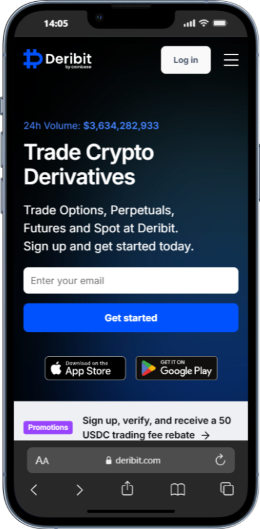
The crypto options trading platform provides advanced options chains, detailed analytics, and full support for Greeks to help traders fine-tune strategies. It also offers low-latency order execution, ensuring that large orders get filled efficiently without major slippage.
Deribit supports a broad range of expirations, from weekly to long-term contracts, and includes robust risk-management tools. Its educational resources and demo environment let traders explore strategies before using real capital.
Pros:
- Deep liquidity for BTC and ETH options and futures
- Professional-grade options chains with advanced analytics and Greeks
- Wide selection of contract expirations and low-latency execution
- Established reputation and long track record in crypto derivatives
Cons:
- Limited asset selection beyond BTC and ETH
- Complex interface may overwhelm beginners
- Full KYC required for higher withdrawal limits and regional access
6. Delta Exchange – Advanced Charting and Portfolio Margin
Delta Exchange is a derivatives-focused platform that offers a clean, intuitive interface with advanced charting tools and risk-management features. Its portfolio margin system allows traders to optimize collateral usage across multiple positions, making it attractive to active derivatives traders.
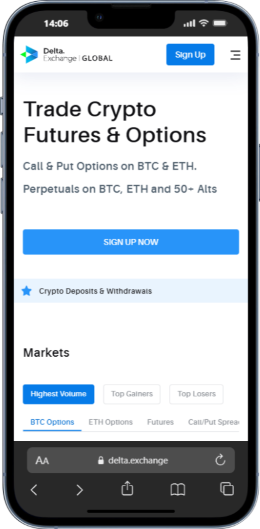
The crypto options platform supports a wide range of crypto options and futures contracts, covering major assets like BTC and ETH along with selected altcoins. It also provides detailed options chains, robust analytics, and custom indicators for fine-tuned trading strategies, making it especially useful for those interested in Bitcoin options.
Delta Exchange is one of the leading crypto options trading platforms 2026, emphasizing institutional-style risk management and high-speed order execution to give both professional and retail traders a competitive edge. Its educational resources and demo trading mode also make it easier for newcomers to learn advanced derivatives trading without risking real funds.
Pros:
- Portfolio margin system optimizing collateral across multiple positions
- Advanced charting tools and customizable indicators
- Broad selection of crypto options and futures contracts
- Fast order execution with institutional-grade infrastructure
Cons:
- Smaller liquidity compared to top-tier exchanges like Binance or Deribit
- Limited fiat funding options
- Some features may be overwhelming for complete beginners
7. KuCoin – Beginner-Friendly Options Trading With Automated Tools
KuCoin is a retail-focused crypto exchange that makes options trading accessible to newcomers. Its simple interface and guided trading tools help beginners learn the basics without being overwhelmed by complex dashboards.
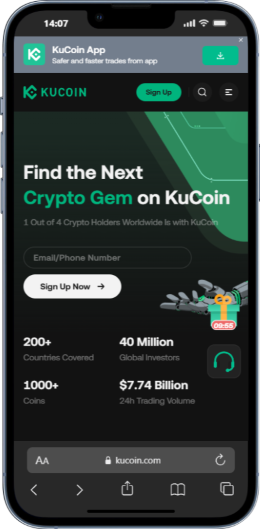
The best crypto options trading platforms 2026 support popular crypto options like BTC and ETH with competitive fees and straightforward order execution. Many of the leading crypto options trading platforms US also offer automated trading strategies and risk calculators, allowing traders to test and refine their approach with minimal manual work.
KuCoin also offers a range of educational resources and community support channels to help new traders gain confidence. Combined with its low minimum deposits and flexible KYC requirements, KuCoin is one of the most accessible entry points to crypto options trading.
Pros:
- Beginner-friendly interface with automated trading and risk calculators
- Low minimum deposits and flexible verification requirements
- Access to popular BTC and ETH options with competitive fees
- Strong community support and educational resources
Cons:
- Limited liquidity compared to top-tier derivatives exchanges
- Fewer advanced tools for professional traders
- Regulatory restrictions in some regions
What are Crypto Options and how do they work?
Options in the cryptocurrency market are agreements that give traders the right, but not the obligation, to buy or sell an asset — a concept explained in detail on Investopedia’s Options Trading Guide. Unlike buying and owning digital assets directly, options let you buy or sell at set prices within certain times. You pay a premium for this right, but you’re not forced to use it.
Every options contract has two sides: the buyer and the writer. The buyer gets the right to act, while the writer gets the premium. The writer must fulfill the contract if the buyer decides to act.
Options value comes from two parts. Intrinsic value is the immediate profit from exercising the contract now. Extrinsic value is the future profit based on time and market volatility.
Time decay, or theta, reduces your option’s value as it gets closer to expiration. This makes your trading decisions urgent. Volatility impact, or vega, means your contracts are more valuable with bigger price swings.

There are two main trading styles in crypto options. American-style options can be exercised at any time before expiration, giving you more flexibility. European-style options can only be exercised on the expiration date, making pricing simpler.
Settlement methods differ across platforms. The best crypto options trading platforms leverage blockchain technology to enable automated settlement through smart contracts, cutting out risks and delays often associated with traditional methods that require actual cryptocurrency or cash payments.
Crypto options are different from traditional equity options. Digital asset volatility is often higher, leading to both greater profit chances and risks. Markets are open 24/7, unlike traditional markets.
Platforms like Deribit and Delta Exchange use blockchain to offer new features. Smart contracts automate complex tasks, making advanced strategies available to individual traders.
Learning these basics is key to understanding crypto options trading. The mix of traditional derivatives and crypto features offers unique chances for managing portfolios and making profits.
How Do Cryptocurrency Options Work?
Cryptocurrency options have many parts that affect how much you can make and how much risk you take. They follow well-known rules but also adjust to digital assets’ special traits. Knowing how they work helps you make smart choices when trading.
Options contracts give you certain rights without needing to act. You can use these rights or let them expire without value. This makes options good for different trading plans and managing risks.
Calls and Puts in Practice
Call options let you buy cryptocurrency at a set price before it expires. You make money if the price goes up. This is best when the market is looking up.
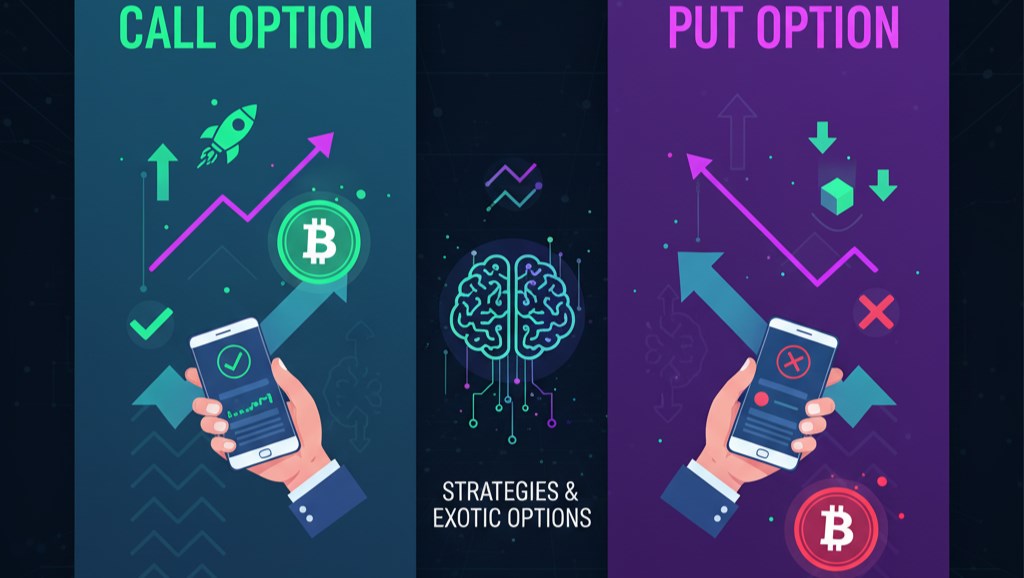
Put options are the opposite. They let you sell cryptocurrency at a set price. You win if the price drops. This is better when the market is going down.
Many places set up their trading systems around these basic options. Some offer more like barrier options or exotic ones. But calls and puts are the base of most strategies.
Contract Duration and Settlement
Options contracts have set end dates, which vary by platform. Weekly contracts expire every Friday for quick trades. Monthly and quarterly options give you more time to guess the market.

How you get paid out differs by exchange. Some pay in cash, others in actual cryptocurrency. But cash settlement is more common in everyday trading.
European-style options can only be exercised at expiration. American-style options can be exercised anytime before. Most crypto exchanges use European-style to keep things simple.
Crypto Options vs. Futures – What Sets Them Apart
Options and futures both rely on cryptocurrencies, but they work in different ways. Many of the top crypto options trading platforms 2026 offer both instruments, giving traders the flexibility to choose strategies that fit their goals. Options and futures help your portfolio in different ways, offering unique benefits based on your trading objectives and risk tolerance.
Futures contracts mean you must buy or sell at a set price, no matter what the market does. You have to complete the deal at the agreed price when the contract ends.
Options are different. They give you the right to buy or sell at a certain price, but you don’t have to. If the market goes against you, you can just let the option expire. This way, your loss is limited to what you paid for the option, which is one of the main advantages of trading crypto options.
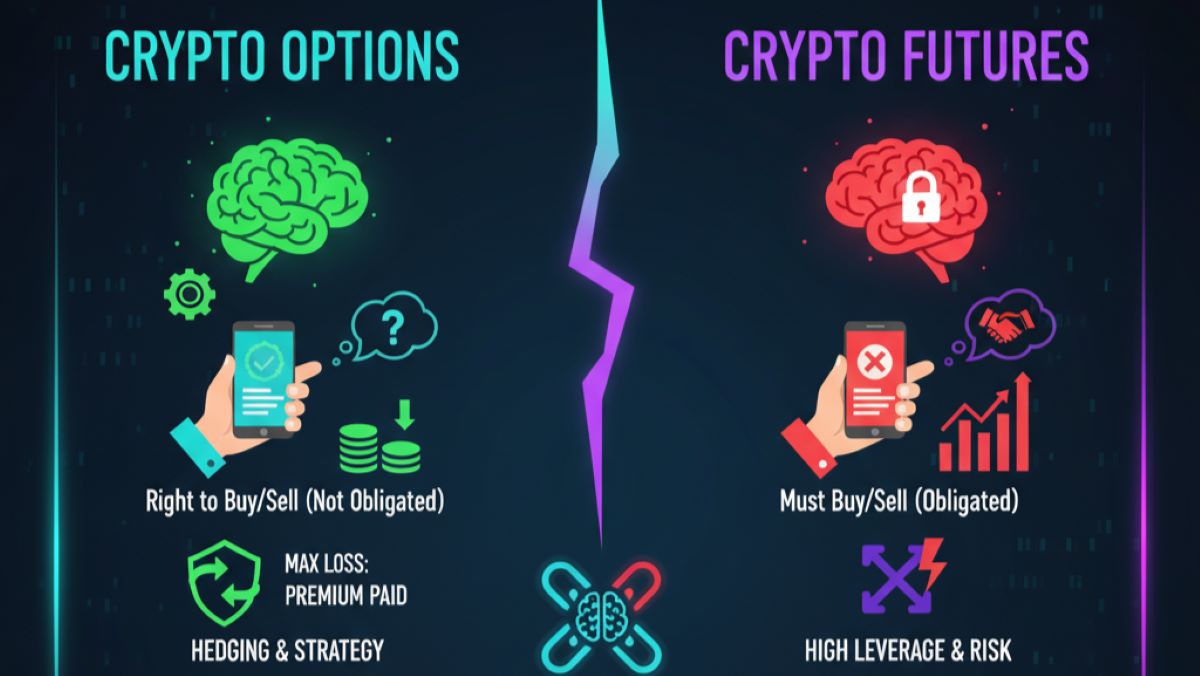
Futures trading can lead to big wins or losses. Your gains or losses can grow much more than your initial investment. This makes it important to manage your positions carefully.
Options trading, on the other hand, limits your loss to what you paid for the option. This makes options good for hedging or for taking risks where you know your loss limit.
| Feature | Crypto Options | Crypto Futures |
| Obligation | Right to buy/sell | Must buy/sell at expiration |
| Maximum Loss | Premium paid | Unlimited |
| Margin Requirements | Premium only for buyers | Initial and maintenance margin |
| Profit Potencial | Unlimited for buyers | Unlimited for both sides |
Futures trading needs a lot of capital upfront and ongoing. You need to keep adding money to your account if your positions lose value. This can be risky and tie up a lot of money.
Options buyers only pay the premium at the start. They don’t need to add more money. But, options sellers need to have a lot of capital ready, just like futures traders.
While platforms like Binance and Bybit often require separate accounts or wallets for different derivatives, CoinFutures offers a simplified, unified trading system with built-in risk limits. Each trade has a capped potential loss, giving users a measure of risk control similar to options, while still allowing for high leverage like traditional futures. This streamlined approach reduces the need to manage multiple strategies or constantly monitor margin levels, although platform and counterparty risks still apply.
When choosing between futures and options, think about how you want to use your capital. Futures offer more leverage for making bets, while options are better for complex strategies. Your choice depends on what matters most to you.
Things to Know Before Trading Crypto Options
Crypto options trading is different from traditional options markets. It has unique challenges. Unlike stock options, crypto options have less standardization and market depth.
Each crypto options trading platform has its own way of trading options. Some are made for big traders, while others are better for individual traders. Knowing these differences helps you pick the right platform for you.
Limited Market Selection
Most platforms focus on big cryptocurrencies like Bitcoin and Ethereum. This is because smaller altcoins often have too little liquidity.
Here’s what you’ll find across major platforms:
- Deribit: Focuses mainly on BTC and ETH options with deep liquidity
- Binance: Offers options on Bitcoin, Ethereum, and some major altcoins
- OKX: Provides BTC and ETH options with easy-to-use mobile interfaces
- Bybit: Combines options with other derivatives in one account
- KuCoin: Features options for retail traders with simple interfaces
Both CoinFutures and Delta Exchange prioritize liquidity by focusing on a select group of high-volume cryptocurrencies. This strategy enhances price efficiency and reduces slippage for traders. However, it also means that trading options are limited to a smaller set of assets compared to larger platforms.
Navigating Complex Options Chains
Options chains show many strike prices and expiration dates at once. This can be overwhelming for beginners. Each platform displays this information differently, so you need to learn their layout.
Key things to understand include:
- Strike price intervals and available ranges
- Expiration date formats and time zones
- Bid-ask spreads and volume indicators
- Greeks display and calculation methods
Deribit has the most detailed options chain data. Platforms like KuCoin make it easier to navigate. Using demo accounts helps you get used to each platform before trading with real money.
Factoring Premiums Into Strike Pricing
Crypto options premiums are high due to the volatility of the assets. These costs are often much higher than traditional options. You need to consider these premiums when choosing your strike price and strategy.
Things to think about include:
- Implied volatility levels compared to historical volatility
- Time decay effects on premium values
- Market maker spreads and liquidity costs
- Platform-specific fee structures
Higher premiums mean you need bigger price movements to make a profit. Carefully calculate your break-even points and consider if the current premiums are fair for your market outlook.
Why Trade Crypto Options? Main Benefits
Crypto options offer advanced risk management tools for traders. They provide better control over losses compared to traditional trading. This makes them a key choice for those looking to manage risk effectively, especially when using the best crypto options trading platform.

Platforms like OKX and Bybit make these tools accessible to all. They offer easy-to-use interfaces for complex strategies. This opens up new ways to manage and grow your portfolio.
Controlled and Finite Risk
Options buyers have a big advantage: limited risk. You can’t lose more than the premium you pay. This protection holds true, no matter how much the cryptocurrency price moves.
Unlike futures or spot trading, options don’t risk more than the premium. This means your loss is capped at the premium cost. It’s a safer way to trade.
Options are great for volatile markets. You can take advantage of price movements while knowing your maximum loss. Bybit helps with this through educational tools and risk management features.
Leveraged Exposure Without Direct Ownership
Options let you leverage cryptocurrency price movements without owning the asset. You can control large amounts with small capital. This makes it easier to diversify your strategies.
The leverage aspect can increase your returns while keeping risks in check. Your premium is a fraction of the asset’s value. This lets you participate in big price movements with less initial investment.
Platforms like OKX make this process easy with clear interfaces. They show leverage ratios and premium costs. This helps you understand the risks and rewards.
Profit Opportunities in Any Market Phase
Options work in all market conditions. You can profit from volatility with strategies like straddles and strangles. These strategies make money when prices move a lot.
In bull markets, call options are best. Bear markets favor put options. Neutral strategies like iron condors work when prices are stable. This makes options useful in uncertain times.
Platforms like Bybit offer tools to build complex strategies. They guide you through different strategies based on market outlook. This helps you know when to use each strategy.
Built-In Hedging Functionality
Options act as insurance for your crypto holdings. They protect your portfolio value without selling your assets. This keeps your upside exposure while limiting losses.
Put options protect long positions. Call options hedge short positions or offer upside participation. These strategies help keep your capital safe during downturns while allowing for growth.
Platforms like OKX offer tools for professional hedging. They have portfolio hedging calculators to find the best protection. This brings pro-level risk management to individual traders.
| Benefit Category | Traditional Trading | Crypto Options | Key Platform Features |
| Risk Management | Unlimited loss possible | Limited to premium paid | Built-in stop-loss protection |
| Capital Efficiency | Full position funding needed | Fractional premium cost | Leverage calculators and margin tools |
| Market Flexibility | Directional bias needed | Profit in any market condition | Strategy builders and market analysis |
| Portfolio Protection | Position closure necessary | Hedging without selling | Automated hedging calculators |
These benefits make options a powerful tool for investors. They offer risk control, capital efficiency, and flexibility. Leading platforms continue to improve these features with better technology and education.
Crypto Options – Pros and Cons You Should Weigh
Before trading crypto options, it’s important to understand the benefits and risks. Whether options are right for you depends on your investment plan and risk tolerance.
Options trading is flexible—you can potentially profit even when prices don’t move much, using strategies like iron condors or butterflies. Many traders appreciate the controlled risk: you cannot lose more than the premium paid, which is helpful in volatile markets.
However, options have challenges. Pricing can be complex, and time decay reduces the value of contracts as expiration approaches. High volatility can make premiums expensive, and liquidity issues can increase trading costs, making it harder to enter or exit positions.
Learning to trade options effectively takes time and practice. Choosing the right platform is crucial—some, like Deribit, offer high liquidity but can be intimidating for beginners. Simpler platforms may lack advanced tools needed by experienced traders.
Success in options trading requires patience, discipline, and continuous learning.
Pros:
- Limited risk exposure – you can’t lose more than the premium paid
- Flexible strategy options – use strategies like iron condors or butterflies
- Profit in any market direction – can make money when prices go up, down, or stay flat
- No direct asset ownership needed – trade derivatives without holding the underlying asset
Cons:
- Complex pricing models – options pricing can be difficult to understand
- Time decay effects – options lose value as they near expiration
- Expensive premiums – high volatility makes options costly
- Limited liquidity – wide bid-ask spreads can increase trading costs
Beginner Tips for a Strong Start in Crypto Options Trading
New traders can build confidence in crypto options by following proven beginner strategies. Success depends on understanding technical concepts and practical platform features. Most Crypto Options Trading Platforms also provide educational resources for newcomers, making it easier to learn and practice before trading with real capital. For beginners, choosing the best crypto options trading platform can make the learning process smoother and more effective.
Start with demo accounts or paper trading before risking real money. Platforms like Binance and Bybit provide virtual trading environments. Here, you can practice without financial risk. This helps you learn platform mechanics and test different strategies safely, which is especially valuable before moving on to live markets such as Bitcoin options.
Focus on liquid options, like Bitcoin and Ethereum options. These markets offer tighter spreads and better execution. This reduces your transaction costs. Avoid illiquid contracts that can be difficult to exit when needed.

Begin with simple strategies like buying calls or puts before attempting complex trades. Multi-leg strategies require advanced understanding of Greeks and risk management principles. Master the basics first, then gradually expand your knowledge and trading complexity.
Position sizing becomes critical in options trading success. The limited downside risk can tempt you to risk large amounts on single trades. But, repeated small losses can erode your capital quickly if you don’t manage position sizes properly.
Understanding implied volatility helps you identify favorable entry and exit points. Crypto markets experience rapid volatility changes that directly impact option pricing. Learn to recognize when options are overpriced or undervalued relative to expected market movement.
Develop a systematic approach to trade selection with clear criteria. Set specific rules for strike price selection, expiration timing, and profit-taking levels. Many successful traders recommend starting with longer-dated contracts to reduce time decay pressure while learning.
| Platform Feature | CoinFutures | Binance | Bybit | OKX | Deribit | Delta Exchange | KuCoin |
| Demo Account | Practice account | Paper trading available | Testnet environment | Virtual trading mode | Testnet / Simulated trading | Testnet environment | Testnet / Practice account |
| Educational Resources | Strategy guides | Academy tutorials | Trading guides | Video lessons | Tutorials & Docs | Guides & Tutorials | Learning Center |
| Beginner Tools | Position sizing helper | Options calculator | Risk management tools | Portfolio analyzer | Options calculator | Risk management tools | Options calculator |
| Support Features | Personal account manager | 24/7 customer service | Live chat support | Community forums | Email & Chat Support | 24/7 Support | 24/7 Support |
Take advantage of platform-specific features that support beginners. Delta Exchange offers portfolio margin systems, while KuCoin provides automated trading strategies. These tools can help you manage risk and implement strategies more effectively as you develop your skills.
Step-by-Step Guide on How to Trade Crypto Options on CoinFutures.io
This section explains how to trade leveraged crypto options on the CoinFutures platform.
Although CoinFutures offers simulated futures rather than traditional options, these derivative products provide similar benefits. This includes leverage of up to 1000x and long and short trading. CoinFutures traders cap their risk to the initial wager, just like an options premium.
Read on to get started with CoinFutures in under five minutes.
Step 1: Open an Account and Download CoinPoker
Open an account on the CoinFutures.io website by clicking “Register” and entering your email, nickname, and password. CoinFutures does not require KYC verification, so no personal documents are needed.
The platform operates through the CoinPoker software. Download the interface via the Android app or Windows/Mac desktop software. Open the interface and sign in using your CoinFutures login details.
Step 2: Deposit Crypto or Fiat
Once logged in, navigate to the “Wallet” section. Deposit cryptocurrencies such as Bitcoin (BTC), Ethereum (ETH), Tether (USDT), or USDC. Make sure to select the correct network and copy the wallet address, or scan the QR code for mobile deposits.
Fiat payments including Visa, MasterCard, Apple/Google Pay, and PIX are also supported. Fiat deposits are processed instantly but may incur fees depending on the currency.
Step 3: Choose a Leveraged Crypto Market
Access the “Crypto Futures” section in the CoinPoker client. Available trading pairs include BTC/USDT, ETH/USDT, DOGE/USDT, and XRP/USDT. Choose the market you want to trade based on your analysis or preference.
Step 4: Enter Direction, Wager, and Leverage
The trading dashboard is displayed next to the pricing chart. Select whether you want to go “Up” (long) or “Down” (short) to indicate your market direction.
Enter your wager, which is the maximum risk you are willing to take. Leverage can be set from 1x to 1000x. Check the “Bust Price,” which is the liquidation point, and consider using the “Auto” tab to set stop-loss and take-profit levels.
Click “Place Bet” to execute your trade.
Step 5: Monitor and Manage Your Position
After placing your trade, monitor your position in real time. You can close it early to lock in profits or limit losses. CoinFutures also has a leaderboard to track performance against other traders.
Overall, trading crypto options via CoinFutures.io provides high leverage, limited risk to your wager, and the ability to trade long and short on top cryptocurrencies without completing KYC.
Conclusion
Your success in crypto options depends on picking the right platform. Each exchange has its own benefits for different traders. They cater to various trading styles and experience levels.
CoinFutures is great for beginners because it has low margin requirements. Binance offers a wide range of contract trading options with low fees. Bybit shines in derivatives, while OKX has top-notch desktop and mobile solutions, making them some of the most popular crypto options exchanges in the market.
Choosing a platform should consider your risk tolerance, trading experience, and capital. Beginners need platforms with good education and easy-to-use interfaces. Experienced traders look for advanced tools and deep liquidity pools.
Security, fees, and contract trading options are key. The crypto options market is always changing, with new features and improvements added regularly.
Managing risk is essential, no matter the platform. The mix of cryptocurrency volatility and options complexity can lead to big losses. Start small, learn a lot, and build your skills gradually.
The future of crypto options trading looks promising. More institutions are getting involved, and regulations are clearer. Traders who learn, manage risk well, and pick the right platform will do well in this fast-changing market.
FAQ
What is the best crypto options trading platform for beginners in 2026?
CoinFutures.io is considered a beginner-friendly platform in 2026 thanks to its simple interface and educational resources. It offers an accessible way to get started with leveraged crypto trading, and beginners can use demo accounts to practice strategies without risking real funds.
How do crypto options differ from traditional stock options?
Crypto options work like traditional options but with some big differences. They often have higher premiums because of crypto’s high volatility. They also have fewer underlying assets, mainly Bitcoin and Ethereum.Settlement can be physical delivery or cash through smart contracts.
What is the minimum amount needed to start trading crypto options?
The minimum varies by platform. CoinFutures has flexible margins up to 1,000x leverage. Binance and OKX usually need smaller deposits.Start with what you can afford to lose, as premiums can be high.
Can I lose more money than I invest when buying crypto options?
No, your loss is capped at the premium you paid. This is a big plus of options trading. It’s safer than futures or leveraged spot trading, where you can lose more than you started with.
Which cryptocurrencies have the most liquid options markets?
Bitcoin and Ethereum have the most liquid options markets. They have the highest liquidity and tightest spreads. Most platforms like Deribit, Binance, and OKX offer these contracts. Other cryptos have limited options due to liquidity issues.
How do I choose between call and put options in crypto trading?
Choose call options if you think the price will go up. Pick put options if you think it will go down. You can also use them to hedge or make money from premiums.
What are the main fees associated with crypto options trading?
Fees include trading commissions, spreads, and settlement fees. Binance has competitive commissions. Deribit might have higher fees but offers more liquidity. Always consider these costs when trading.
Is crypto contract trading the same as options trading?
No, crypto contract trading includes options and futures. Options have limited risk, while futures have unlimited risk. Many platforms offer both.
How long do crypto options contracts typically last?
Contract lengths vary. Some are weekly for short-term strategies. Others are quarterly or annual. Longer contracts cost more but have less time decay pressure. Beginners often start with longer contracts.
What happens if I don’t close my options position before expiration?
At expiration, options settle based on their intrinsic value. If in-the-money, you get the difference between the strike and market price. Out-of-the-money options expire worthless. Settlement can be cash or physical delivery, depending on the platform.
Can I trade crypto options on mobile devices?
Yes, top platforms like OKX, Bybit, and Binance have mobile apps. OKX is known for its seamless experience across devices. It has advanced charting and Web3 wallet integration.
What is implied volatility and why is it important in crypto options?
Implied volatility shows market expectations of future price movements. It affects option premiums. High volatility means expensive premiums. Understanding volatility helps in making better trading decisions.
Do I need special qualifications to trade crypto options?
While platforms like Binance and Bybit often require KYC verification and involve complex account management for different derivatives, CoinFutures streamlines the process with a unified, risk-limited trading model. It combines the advantages of options (capped risk) and futures (high leverage) into one simple system — eliminating the need to juggle multiple strategies or worry about margin calls. In addition, CoinFutures enables anonymous trading with no KYC requirements, setting it apart from many other platforms that mandate identity verification.
How do I manage risk when trading crypto options?
Manage risk by setting strict position sizes and never risking more than you can afford. Start simple and progress to more complex strategies. Use stop-losses and understand time decay. Consider demo accounts for practice.
References
- Kaiko Research – Derivatives Liquidity & Market Structure – (kaiko.com)
- Deribit Insights – BTC & ETH Options Market Analytics – (insights.deribit.com)
- BIS (Bank for International Settlements) – Crypto Derivatives Risk Framework – (bis.org)
- The Block Research – Quarterly Options & Futures Data – (theblock.co/research)